
Pillar Guide
Stress and Balance: A Practical Guide to Understanding and Managing Stress
Understand the stress response, how stress can affect the body and sleep, and practical ways to support recovery and everyday balance.
Updated


Quick answer
How can you manage stress?
Stress is a normal response to demands or pressure. It can be useful in the short term, but sustained stress without enough recovery may affect sleep, mood, concentration, energy, muscle tension, and digestion. The experience is individual, and stress is rarely the only possible explanation for a physical or emotional symptom.
A practical approach is to identify the demand, change what is within your control, and support recovery with realistic habits. Regular movement, consistent sleep, moments of genuine rest, social connection, and simple breathing or relaxation practices may help. Start with one manageable action, notice what changes, and seek qualified support when stress is persistent, feels unmanageable, or significantly affects daily life.
Listen
Stress & Balance in 5 Minutes
A short overview of how stress works, what recovery can look like, and where to begin.
ANIVO editorial framework
The ANIVO Stress Framework
Use these five steps to organize what is happening and choose a realistic next action. The aim is not to eliminate every stressor, but to create more room to respond intentionally.
Identify the demand
Name the pressure, uncertainty, or pattern that is asking something of you.
Change what you can
Look for one part of the situation, expectation, or environment that is within reach.
Support recovery
Protect the basics that help you recover between demands, including sleep, food, movement, rest, and connection.
Use practical tools
Try a small tool that fits the moment, such as a pause, gentle breathing, movement, or a change of environment.
Reassess
Notice what changed, what did not, and whether the situation calls for a different approach or more support.
This is ANIVO's editorial framework for organizing evidence-informed guidance. It is not a clinically validated assessment or treatment model.
What Is Stress?
Stress is the body's natural response to perceived demand or pressure. It is not simply an emotion — it is a coordinated shift in how the body and mind function, one that evolved to help us meet challenges and respond to potential threats. In this sense, stress is not inherently negative. It is a mechanism.
The experience of stress can range from mild background tension to something more acute and consuming. What most people notice first is a feeling of being pressed — a sense that demands are outpacing the resources available to meet them. This can arise from a single significant event, from many smaller pressures accumulating over time, or from conditions that have been sustained without adequate recovery.
It helps to distinguish between short-term and longer-term stress. Short-term stress tends to be focused and time-limited. It may increase alertness, narrow attention to what matters in the moment, and then resolve once the pressure passes. Longer-term stress is different. When there is no clear resolution and no adequate recovery, the body's stress systems remain in a state of activation. Over time, this sustained activation can spill over into sleep, mood, energy, and physical wellbeing in ways that may be harder to trace back to a single source.
Understanding stress also means recognizing that it exists on a spectrum — and that it responds to context, interpretation, and the resources available to manage it. It is not a character flaw or a sign of weakness. It is a signal, and like most signals, it becomes more useful the earlier it is noticed.
This guide explores some of the key dimensions of stress: how it may affect the body, how it can show up in everyday life, and what habits and practices some people find helpful in building a more sustainable sense of balance. It is an orientation, not a prescription.
How Does the Stress Response Work?
When the brain perceives a challenge or threat, the body coordinates changes intended to help meet the demand. Attention may narrow, heart rate and breathing may increase, muscles may tense, and energy is redirected toward immediate action. These shifts are purposeful in the short term.
The response does not depend only on the event itself. Context, previous experience, available resources, and how a situation is interpreted can all shape how demanding it feels. Once the demand passes, recovery allows these systems to move back toward their usual state. Problems may arise when demands continue, repeat often, or leave too little time for recovery.
How Does Stress Affect the Nervous System?
The autonomic nervous system helps coordinate changes in alertness, heart rate, breathing, digestion, and other functions outside moment-to-moment conscious control. During stress, patterns associated with mobilization can become more prominent. During recovery, other patterns help support rest, digestion, and restoration.
This is not a simple switch in which one side is bad and the other is good. Both are necessary. The practical aim is flexibility: responding when action is needed and having enough opportunity to recover afterward.
How Can Stress Affect the Body and Mind?
Stress is a whole-body experience. When the stress response activates, it can affect physical sensations as well as thoughts and emotions. These changes are purposeful in the short term, but they may become more disruptive when activation continues without enough recovery.
Physical signs
- Muscle tension, especially around the jaw, shoulders, or back of the neck.
- Faster, shallower breathing during periods of high activation.
- Changes in appetite, digestive discomfort, or altered gut function.
- Short-term increases in heart rate or blood pressure during acute stress.
- Changes in sleep, which can also feed back into stress.
Thoughts and emotions
- Changes in mood or emotional state.
- Difficulty concentrating or mentally switching off.
- Worry, irritability, or a reduced capacity for enjoyment.
- Emotional or cognitive effects that become more noticeable as stress accumulates.
These signs can have many contributing factors. Stress may be among them, but it is rarely the only possible cause, so physical or emotional symptoms should not automatically be attributed to stress. Noticing your own patterns can still provide useful context and create more room for a considered response.
How Does Stress Affect Sleep?
Stress and sleep affect each other closely, and the relationship tends to run in both directions. When the nervous system is in a state of heightened activation, the physiological conditions that support sleep — a gradual slowing of the body's systems, a softening of alertness — can become harder to reach. Many people notice this as difficulty falling asleep, waking in the night with a busy mind, or sleep that does not feel restorative even when the hours are adequate.
At the same time, sleep that is regularly disrupted or insufficient can make it harder to manage the emotional and cognitive demands of the following day. Concentration may narrow, emotional reactivity may increase, and the ability to find things manageable can diminish. For many people this creates a cycle that can feel self-reinforcing: activation from stress disrupts sleep, and disrupted sleep amplifies the experience of stress.
Understanding this dynamic is useful because it points toward where small changes may have compounding effects over time. Habits that support sleep quality can also reduce the felt intensity of stress during waking hours, and habits that help regulate the stress response across the day may contribute to conditions more conducive to rest at night.
What tends to support the stress-sleep connection most reliably is regularity: consistent sleep and wake times, an evening environment that allows the nervous system to settle gradually, and a reduction in sources of stimulation in the period before bed. None of these are guaranteed solutions, and individual responses vary considerably. They represent a reasonable starting point for people who notice that stress and sleep are affecting each other, rather than a prescription that suits everyone equally.
Acute Stress vs. Chronic Stress
Acute stress is usually focused and time-limited. Chronic stress continues or recurs without enough recovery, which may make its effects harder to notice and more disruptive over time.
One of the more practical skills in relation to stress is developing an ability to notice when it is accumulating — before it reaches a point where it feels overwhelming. This is harder than it sounds. Stress has a way of normalizing itself. The baseline shifts gradually, and what once felt like a high level of pressure can come to seem like ordinary life.
There is no universal description of what overload looks or feels like. For some people it shows up primarily as irritability — a shortened fuse, a sense of being easily disrupted by things that would ordinarily pass without much notice. For others the experience is more physical: persistent fatigue even after adequate sleep, tension that does not ease, or a general sense of heaviness. Some people notice cognitive effects first — difficulty concentrating, a tendency toward worry, or an inability to mentally switch off at the end of the day.
It can be useful to develop an awareness of the patterns that tend to appear earliest for you personally. These early signals are generally more actionable than waiting until the effects become more disruptive. They are information rather than failure.
It is also worth noting that stress is not always the result of obvious or dramatic events. Cumulative pressure — many smaller demands, responsibilities, or uncertainties adding up over time — can produce effects similar to acute stress, sometimes without a clear triggering event that is easy to identify.
Notice also that overload does not always feel dramatic. Sometimes it shows up as a quiet flatness — a reduced capacity for enjoyment, connection, or motivation that builds slowly enough to go unnoticed until it is well established. Paying attention to these subtler changes can be as important as attending to the more obvious signals.
These descriptions are not a basis for clinical assessment. The purpose here is simply to highlight that developing personal awareness — catching patterns early — tends to create more room to respond thoughtfully rather than reactively.
10 Practical Ways to Manage Stress
There is no universal fix for stress, and claims suggesting otherwise are worth approaching with skepticism. The evidence behind different approaches is uneven, and individual responses vary considerably — which is why the purpose here is orientation rather than recommendation.
- Name the main demand instead of treating stress as one undifferentiated problem.
- Change one part of the situation that is genuinely within your control.
- Protect a reasonably consistent sleep and wake rhythm where circumstances allow.
- Include regular movement in a form that suits your current capacity.
- Create brief periods of genuine rest away from incoming tasks and information.
- Connect with someone you trust rather than carrying every demand alone.
- Pause and notice your breathing without forcing it to change.
- Eat at reasonably regular intervals and stay adequately hydrated.
- Reduce avoidable stimulation when you need to wind down.
- Choose one small action, practise it consistently, and reassess before adding more.
What does exist is a set of habits and approaches that many people report finding helpful, and that have attracted varying degrees of research attention.
Movement is one of the most consistently mentioned factors in discussions of stress management. This does not need to mean formal exercise programs, though that is one form it can take. Regular walking, gentle physical activity, time spent active outdoors — any of these may contribute to how the body processes stress and how the nervous system recovers between demands. The value tends to lie in regularity rather than intensity.
Sleep and recovery deserve their own attention as active factors rather than passive outcomes. The relationship between sleep and stress is close enough that treating them separately tends to be less useful than addressing them together. This includes not just nighttime sleep but also moments of genuine rest and disconnection during the day — time when the mind is not actively directed toward tasks, responsibilities, or incoming information.
Social connection also appears in the research literature as a meaningful factor. Stress that is carried in isolation tends to feel heavier than stress that is shared, contextualized, or simply witnessed by someone trusted. For many people, a sense of connection and belonging — through relationships, community, or meaningful work — provides a degree of buffering that is difficult to replicate through individual habits alone.
Nutrition and diet are sometimes included in discussions of stress management, though the evidence in this area is more variable and the relationships are complex. General principles — adequate hydration, regular meals, and moderation in substances that affect sleep or mood — are broadly reasonable, but specific dietary claims as stress remedies warrant caution.
Finally, it is worth noting that the conditions that produce stress are often external — workload, financial pressure, caregiving demands, relationship difficulties. Habits and self-regulation practices can support the capacity to manage these conditions, but they are not a substitute for addressing the external circumstances themselves where that is possible. Sustainable balance tends to involve both.
Daily Habits That Support Recovery
Balance is less a fixed state than an ongoing practice. The aim is not to eliminate pressure, but to build a few repeatable points of support across the day.
Morning
A consistent wake time, an anchored first part of the day, and reasonably regular meals can provide a loose framework that supports the body's natural rhythms. Regularity is not rigidity; it should remain flexible enough to accommodate disruption.
During the Day
Create brief periods when the mind is not directed toward tasks or incoming information. Small areas of genuine choice, meaningful activity, or unhurried time may support a sense of restoration and agency.
Evening
A reasonably consistent sleep time and a gradual reduction in demands can create space for rest. What supports balance in one period of life may need to change as circumstances change.
Building this kind of routine is gradual. The most durable approach is usually flexible and adapted to actual circumstances rather than treated as a fixed plan. When routines break down during demanding periods, illness, or significant life changes, the useful skill is returning to them without treating the disruption as a setback.
Breathing and Relaxation for Stress
Breathing occupies an unusual position in the body's physiology. It is an automatic process — the body manages it without conscious effort — but it is also one that can be brought under deliberate control. This dual nature is part of what draws interest to breathing in the context of stress.
When the stress response is active, breathing patterns often change. The breath may become faster and shallower, centered higher in the chest. Some people find that deliberately bringing attention to the breath — without forcing it to change, simply noticing it — produces a small but noticeable shift in their state. Others find that allowing the breath to slow and deepen gently can be helpful in moments of acute activation. Responses vary, and not everyone finds breath-focused approaches accessible, particularly when stress is already high.
A broader category of relaxation and awareness practices — which includes meditation, body-based awareness techniques, and gentle movement — has been the subject of research into stress and wellbeing. Results in this area are mixed and highly individual. What does appear fairly consistent across different practices is that regularity matters: occasional practice tends to be less useful than something done sustainably and often, even in very small amounts.
It is also worth noting that deliberate relaxation is not straightforward for everyone. Some people find that attempting to relax under pressure initially produces more discomfort rather than less. This is a recognized experience, not a sign that the approach is wrong. In those cases, gentle movement, time outdoors, or a change of environment may be more accessible as a starting point.
The broader principle is that building in regular moments of deliberate calm — in whatever form is sustainable and accessible — tends to be more useful as part of an ongoing routine than as a crisis response deployed only at moments of peak pressure.
Nutrition and Stress
Nutrition is a supporting foundation, not a cure for stress. A varied overall eating pattern, reasonably regular meals, adequate hydration, and attention to caffeine timing can support general wellbeing and may make recovery routines easier to maintain. Individual needs and responses vary.
Be cautious with claims about single foods lowering cortisol or treating stress. During demanding periods, a realistic meal or snack is often more useful than trying to follow a perfect plan.
Supplements for Stress Support
Supplements are optional additions, not substitutes for sleep, nutrition, movement, professional care, or changes to the circumstances creating stress. Evidence depends on the ingredient, preparation, dose, population, and outcome studied.
Magnesium is an essential mineral, but evidence for using supplementation specifically for stress remains limited and should not be generalized to everyone. Some research suggests L-theanine may support aspects of relaxation or stress response, although findings and study quality vary. Research suggests some ashwagandha preparations may help with perceived stress or sleep in the short term, but products differ and long-term safety is not well established.
Check with a qualified health professional if you take medication, are pregnant or breastfeeding, have a health condition, or are unsure whether a supplement is appropriate. Ashwagandha has important interaction and safety considerations, and excess supplemental magnesium may cause adverse effects.
When Should You Seek More Support?
This guide is educational. The ideas and habits described here are not a substitute for professional support, and they are not an adequate response to severe, persistent, or debilitating stress.
There is no precise threshold at which stress moves from difficult but manageable into territory where professional support would be appropriate — that is a personal judgment that depends on the individual, their circumstances, and the impact on their daily life. Some patterns that may be worth taking seriously include stress that is significantly affecting relationships, work, or daily functioning; persistent low mood or anxiety that does not ease with rest or time; physical symptoms that are unexplained or worsening; or a sustained sense that things feel genuinely beyond what can be managed alone.
Reaching out to a qualified mental health professional, a counselor, or a primary care provider is a reasonable step when stress is meaningfully affecting quality of life. These professionals can offer assessment, context, and support that educational resources cannot.
It is also worth noting that stress is sometimes a signal pointing to circumstances that may need to change — workload, environment, relationships — rather than simply an internal response to be managed through individual effort. In those cases, appropriate support may involve not just coping strategies but practical help, structural changes, or outside perspective. Recognizing this distinction is part of taking stress seriously.
Frequently Asked Questions
Is stress always harmful?
Not necessarily. Short-term stress can sharpen focus and help motivate action. The challenges tend to arise when stress is sustained over a long period without adequate recovery, or when demands consistently outpace the available resources to meet them. How stress is experienced, and what effects it has, can vary considerably between people and circumstances.
How do I know if I am experiencing too much stress?
There is no universal threshold. Signs that stress may be having a meaningful impact include feeling persistently reactive or irritable, difficulty sleeping or relaxing, low energy, or finding ordinary tasks feel disproportionately demanding. These are patterns worth noticing, not diagnostic criteria — but if they persist, they are worth taking seriously.
Can stress affect physical health?
Research suggests that sustained stress may influence various physical processes, including sleep, muscle tension, and digestive function. The extent to which stress contributes to any given physical experience depends on many factors, and the evidence varies by condition. It is rarely the only relevant factor, but in a context of ongoing difficulty, it is worth considering.
What can I do in the moment when stress feels acute?
Some people find it helpful to pause what they are doing, allow their breathing to settle without trying to control it, or move to a different environment briefly. There is no single approach that works for everyone. The goal in an acute moment is often to create a small amount of space before responding rather than to resolve the stressor immediately.
How long does it take for stress-management habits to make a difference?
This varies considerably and there is no reliable general timeline. It depends on the consistency of practice, the nature of the stressors involved, and many individual factors. Some people notice gradual shifts after a period of consistent effort; for others, change is slower or less linear. Expecting immediate or uniform results tends to add pressure rather than reduce it.
When should I speak with a professional about stress?
If stress is significantly affecting your daily life, relationships, sleep, or work over a sustained period — or if you are experiencing persistent anxiety, low mood, or a sense that things feel genuinely unmanageable — speaking with a mental health professional or primary care provider is a reasonable step. Educational resources like this guide are not a substitute for professional assessment or support.
Where to Go Next

How to Notice Physical Signs of Overwhelm Earlier
Overwhelm does not always arrive all at once. It may begin with small physical signals such as a tight jaw, raised shoulders, changes in breathing, fatigue, or difficulty focusing. Learning to notice your own patterns gently can help you respond earlier.
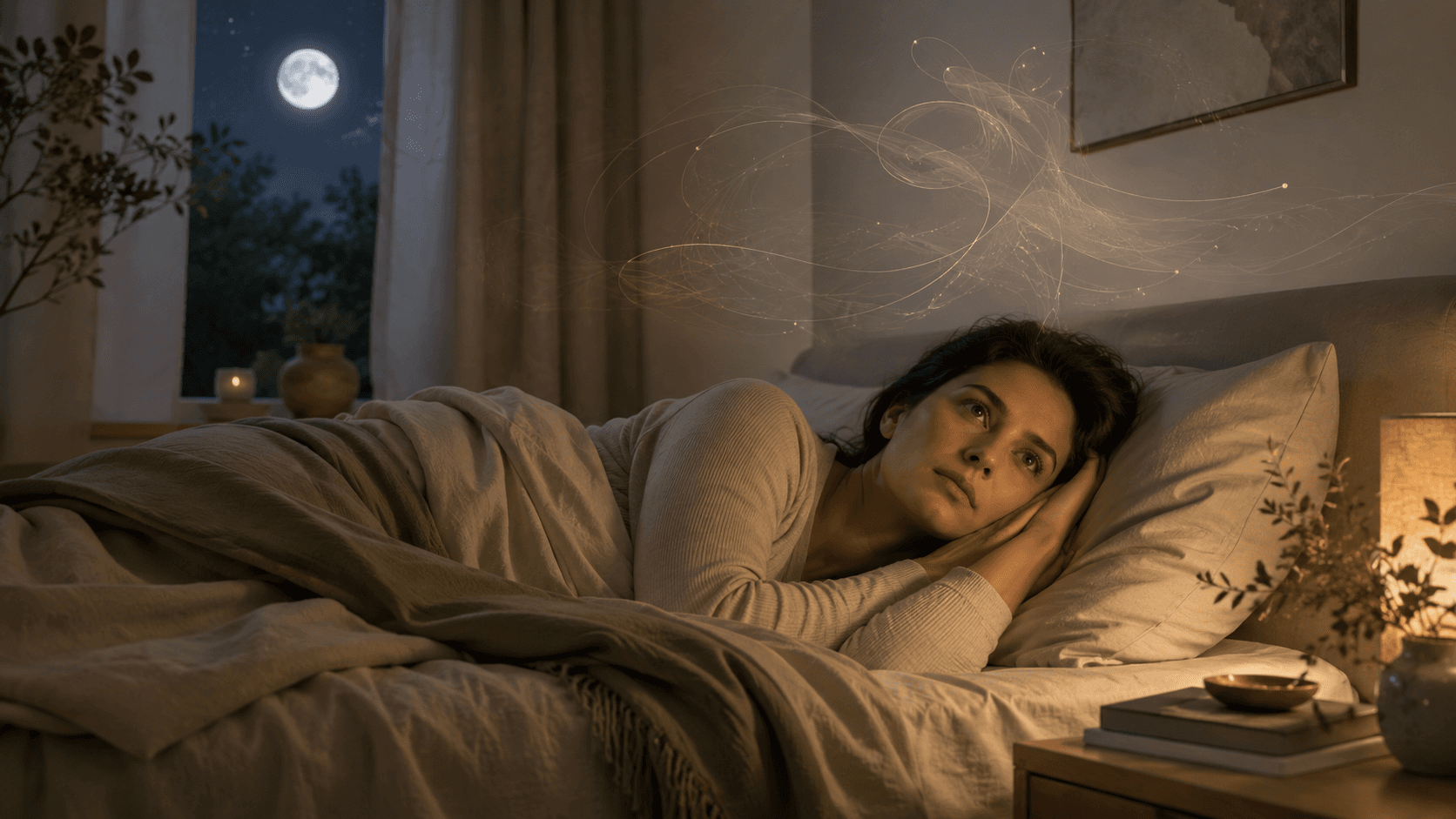
The Stress-Sleep Cycle: Why Stress Can Keep You Awake
Stress can make it harder to rest, and a difficult night can make the next day feel even more demanding. Learn how the stress-sleep cycle works and what may help the body transition toward rest.
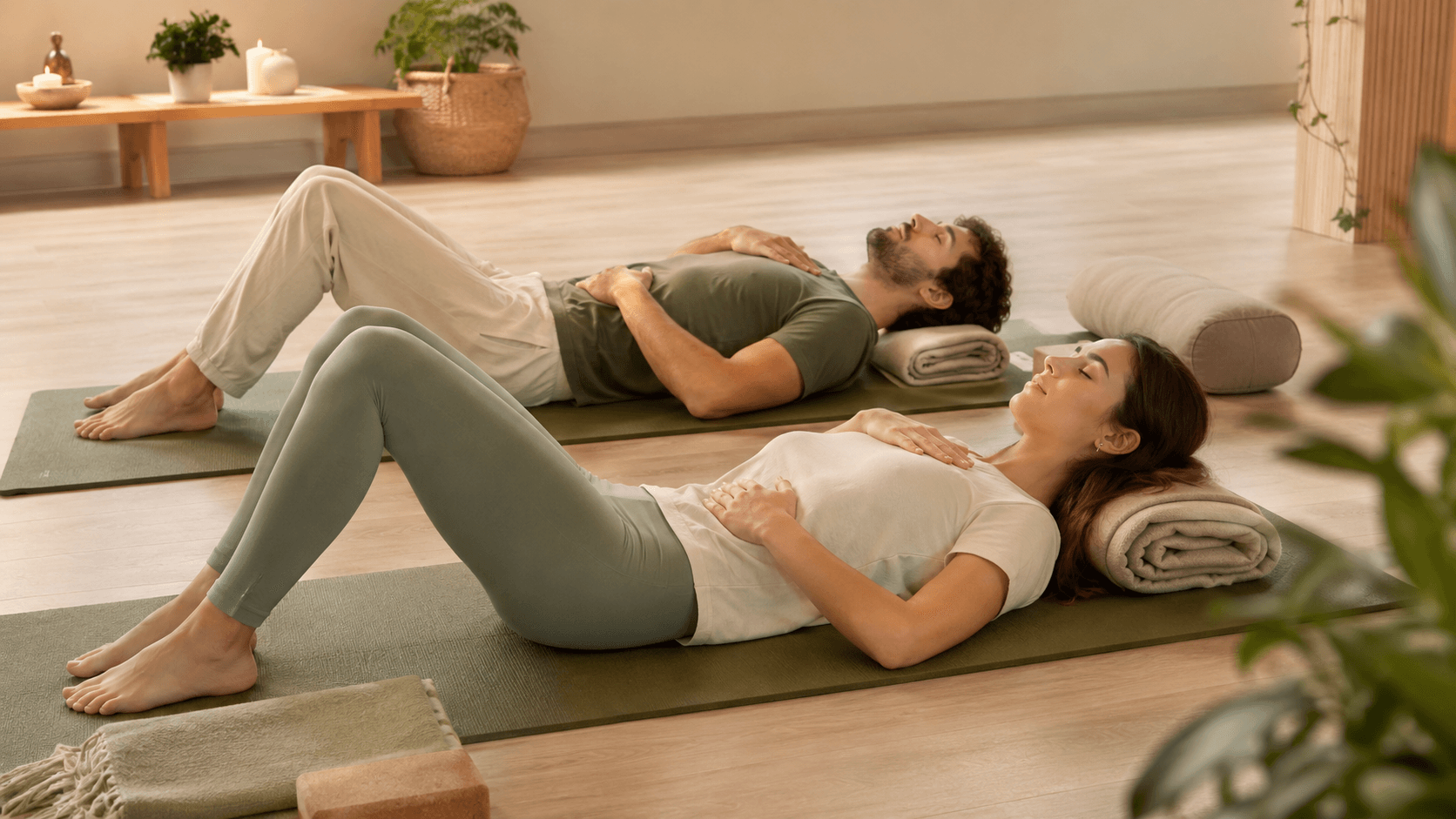
Breathing Techniques for Beginners: 3 Gentle Practices to Try
Explore three beginner-friendly breathing techniques: breath awareness, gentle diaphragmatic breathing, and a softer exhale. This practical guide helps you begin with comfort, simplicity, and no pressure to follow a perfect rhythm.

How Your Thoughts Can Shape the Way Stress Feels
Stress is shaped by real-life demands, but also by the meaning we give them. Learn how to separate events from interpretations and explore a simple reflection exercise for responding with more clarity.
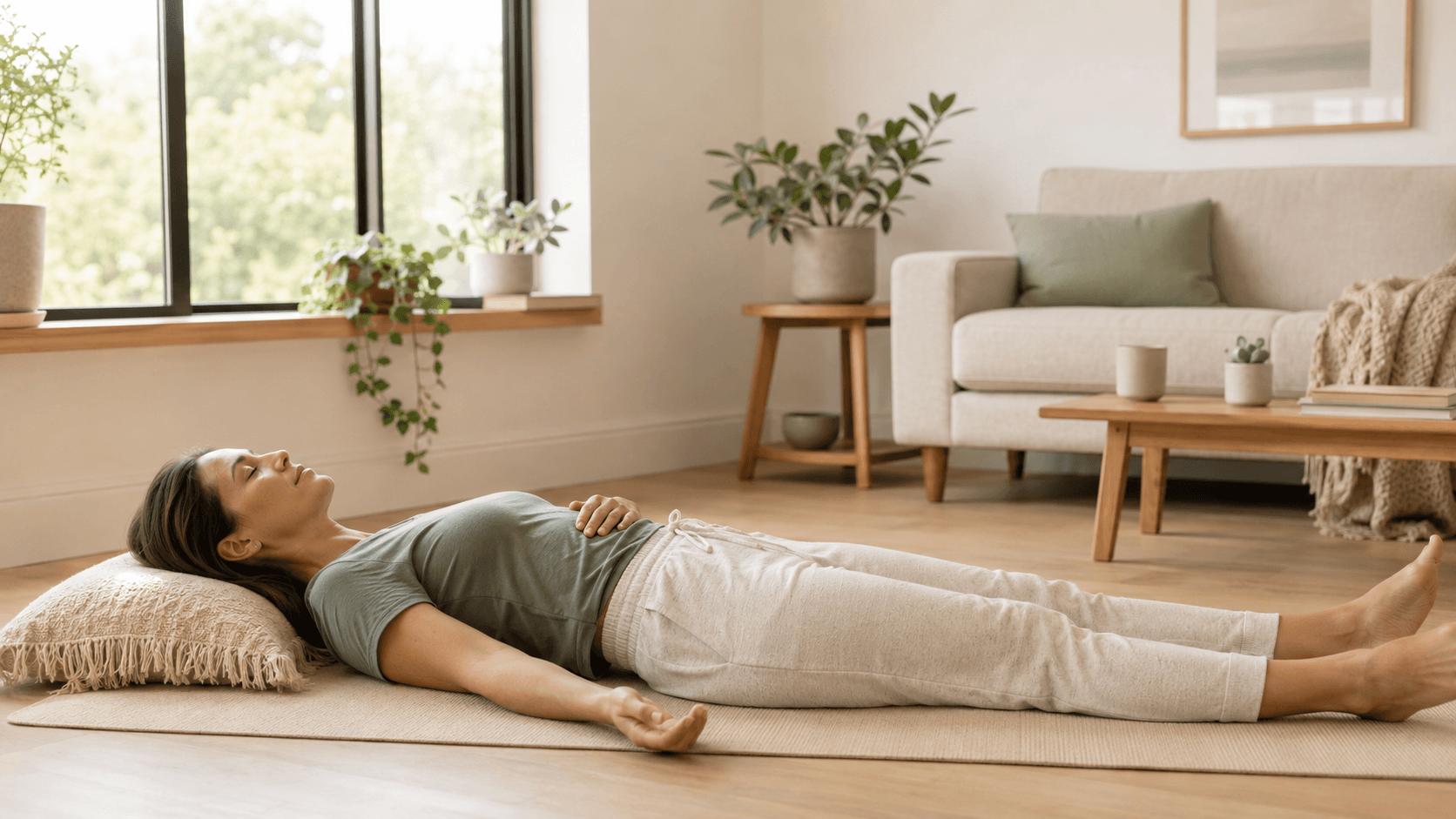
A Beginner's Guide to Body Scanning
A body scan is a simple way to pause and notice what is happening in your body without trying to fix every sensation. This beginner-friendly guide offers a calm 3–5 minute practice you can use during ordinary days.
Sources and About This Guide
ANIVO uses evidence-informed, educational language and prioritizes authoritative health organizations, peer-reviewed research, and clear safety context. This guide does not replace individual medical or mental health care.
- Stress — World Health Organization
- I'm So Stressed Out! Fact Sheet — National Institute of Mental Health
- Relaxation Techniques: What You Need To Know — National Center for Complementary and Integrative Health
- Ashwagandha: Usefulness and Safety — National Center for Complementary and Integrative Health
- Magnesium Fact Sheet for Consumers — NIH Office of Dietary Supplements
- The Effects of L-Theanine Consumption on Stress and Anxiety Levels: A Systematic Review — PubMed
Last reviewed: August 2026